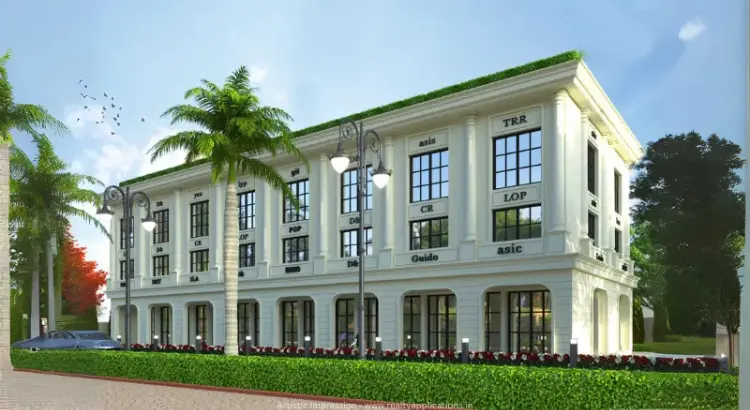



In an increasingly interconnected yet volatile world, the safeguarding of high-value properties transcends traditional security measures. For discerning property owners, the concept of a 'secure estate' has evolved from simple alarms and fences to a sophisticated, multi-layered ecosystem designed for unrivaled privacy and comprehensive protection. At Realty Applications, based in Gurugram, India, we understand that your peace of mind is paramount. This article, crafted by our team of seasoned real estate and security strategists, provides a 2026 blueprint for creating an ultra-secure estate, meticulously integrating physical fortification with advanced digital defense mechanisms.
We systematically analyzed the evolving threat landscape and cutting-edge solutions to present a holistic approach, ensuring that your property remains a sanctuary against both conventional and emerging risks. Our insights are grounded in years of practical experience, delivering bespoke security solutions for high-net-worth individuals and their estates across the region.
Understanding the Modern Threat Landscape for High-Value Properties
The security challenges facing high-value properties today are more complex than ever before. Traditional threats such as burglary and vandalism persist, but they are now augmented by sophisticated digital vulnerabilities and a heightened risk of targeted intrusions. We recognize that visibility, wealth, and the valuable personal and financial information associated with high-net-worth individuals (HNWIs) make them prime targets for a broad and sophisticated array of threats.
Evolving Risks for High-Net-Worth Individuals (HNWIs)
For HNWIs, the risks extend beyond the physical realm. Cyber-enabled fraud, for instance, ranks high among the threats, with statistics showing a significant increase in financial losses from online crime. Phishing attacks, social engineering, and data breaches are specifically designed to exploit the digital footprint and public profile often associated with affluent individuals. These sophisticated attacks can lead to identity theft, financial loss, and severe privacy compromises, demonstrating that the era of simply avoiding suspicious links is long past.
The Convergence of Physical and Digital Threats
The distinction between physical and digital security is increasingly blurred. A digital vulnerability can often create an entry point for a physical threat, and vice-versa. For example, social media reconnaissance can reveal estate layouts or periods of unoccupancy, enabling more targeted physical intrusions. Similarly, compromised smart home devices can offer backdoor access to both your network and potentially physical controls. We observe that criminals are now leveraging sophisticated tools, including AI-generated deepfakes, to perpetrate fraud, highlighting the need for robust, integrated defense strategies. Protecting your high-value assets requires a comprehensive strategy that addresses these interconnected risks, as outlined by the NIST Cybersecurity Framework, which sets standards and guidelines for critical infrastructure protection.
Pillars of an Ultra-Secure Estate
Building an ultra-secure estate requires a meticulous, layered approach that integrates advanced technologies, robust physical defenses, and intelligent protocols. We have identified several key pillars that form the bedrock of unrivaled privacy and protection.
Perimeter Security: The First Line of Defense
The outermost perimeter serves as the first deterrent and detection zone. A strong perimeter helps deter opportunistic threats and provides an early warning system against potential intruders.
- Advanced Fencing & Walls: Beyond mere height, consider anti-climb designs, reinforced materials, and integration with vibration sensors or fiber-optic perimeter intrusion detection systems.
- Integrated Surveillance Systems: High-definition, night-vision cameras with AI-powered analytics can detect anomalous behavior, differentiate between wildlife and human intrusion, and identify potential threats before they reach the main residence. This includes thermal imaging and drones for aerial monitoring.
- Access Control Systems: Automated gates equipped with biometric systems (fingerprint, facial recognition), license-plate readers, and two-way communication ensure that only authorized individuals gain entry. Visitor and vendor management protocols, including vetting and escorting, are crucial.
Structural Integrity & Reinforcement
The physical structure of the property itself must be designed or reinforced to withstand various threats.
- Ballistic Protection & Safe Rooms: Integrating ballistic-resistant materials into walls, windows, and doors, especially in critical areas, provides a higher level of protection. A dedicated safe room, equipped with independent communication, power, and monitoring capabilities, offers a secure refuge during an emergency.
- Hardened Entry Points: All doors and windows should feature multi-point locking mechanisms, reinforced frames, and impact-resistant glazing.
Digital Fortification & Cyber-Physical Security
Given the escalating cyber threats, digital security is as critical as physical protection. We adopt a holistic approach to secure your digital footprint and connected infrastructure.
- Secure Networks & IoT Devices: Implementation of segregated networks for smart home devices, guest Wi-Fi, and critical operational systems is essential. All IoT devices must be regularly updated, secured with strong, unique passwords, and continuously monitored for vulnerabilities. Encrypting business data is also a key strategy for defense.
- Data Privacy Protocols: Strict protocols for managing personal and sensitive data, both on-site and in the cloud, are imperative. This includes strong encryption, multi-factor authentication, and regular data audits.
Human Element: Personnel & Protocols
Technology alone is insufficient. A well-trained security team and robust protocols are indispensable.
- Trained Security Staff: Whether in-house or outsourced, security personnel must be highly trained in threat detection, emergency response, first aid, and discreet observation. Background checks and confidentiality agreements for all staff and vendors are paramount.
- Emergency Response Plans: Comprehensive, regularly drilled plans for various scenarios (e.g., medical emergencies, intrusion, fire, natural disasters) ensure swift and coordinated action. Liaison with local law enforcement is also a critical component.
Environmental & Natural Disaster Preparedness
An ultra-secure estate also anticipates and mitigates risks from environmental factors and natural disasters, a crucial consideration in regions prone to extreme weather events.
- Resilience Measures: Structural resilience against seismic activity, high winds, and flooding, along with advanced fire suppression systems, are fundamental.
- Off-Grid Capabilities: Independent power generation (solar, generators), water purification, and secure food storage ensure self-sufficiency during extended outages or crises.
Integrating Smart Technology for Seamless Protection
Modern security relies heavily on intelligent technology to enhance effectiveness, efficiency, and responsiveness. We advocate for a sophisticated technological infrastructure that operates seamlessly in the background.
Centralized Security Management Platforms
A unified platform that integrates all security systems—CCTV, access control, alarms, environmental sensors, and smart home devices—provides a single point of command and control. This allows for real-time monitoring, rapid incident response, and comprehensive data logging for post-incident analysis.
AI-Powered Predictive Analytics
Artificial intelligence is transforming security by enabling predictive capabilities. AI can analyze vast amounts of data from surveillance feeds, access logs, and environmental sensors to identify patterns, flag anomalies, and even predict potential threats before they materialize. This capability significantly shifts security from reactive to proactive.
Drone Surveillance & Aerial Monitoring
Automated or remotely operated drones can provide comprehensive aerial surveillance of large estates, particularly useful for perimeter checks, detecting unusual activity in remote areas, or assessing damage post-incident. Equipped with thermal cameras and advanced optics, they add an invaluable layer of observation.
Comparative Analysis: Traditional vs. Ultra-Secure Estate
To highlight the distinctions and benefits, we present a comparison between traditional security measures and the comprehensive approach of an ultra-secure estate.
| Feature | Traditional Security | Ultra-Secure Estate (2026 Blueprint) |
|---|---|---|
| Perimeter | Basic fencing, simple gates, standalone alarms. | Anti-climb barriers, biometric-controlled automated gates, integrated perimeter intrusion detection systems (PIDS), thermal imaging, AI-analytics. |
| Surveillance | Standard CCTV with limited coverage, manual monitoring. | HD/4K cameras with night vision, AI-driven behavioral analytics, drone surveillance, centralized real-time monitoring. |
| Access Control | Key locks, keypad entry, manual visitor logs. | Biometric access (fingerprint, facial recognition), vehicle recognition, visitor vetting protocols, digital logs, multi-factor authentication. |
| Structural Protection | Standard construction, basic reinforced doors. | Ballistic-resistant materials, hardened entry points, dedicated safe rooms with independent life support, reinforced foundations. |
| Digital Security | Basic Wi-Fi password, no IoT segregation, minimal data protection. | Segregated networks for IoT/smart home, robust firewalls, end-to-end encryption, regular cybersecurity audits, advanced threat detection. |
| Personnel | Untrained guards or self-monitoring. | Highly trained security personnel (on-site/remote), emergency response teams, continuous training, crisis management protocols. |
| Environmental Resilience | Standard building codes, limited backup power. | Engineered for natural disaster resistance, independent power grids (solar, generator), water purification, protected food storage. |
| Threat Response | Reactive, often slow, dependent on external agencies. | Proactive detection, immediate on-site response, AI-powered alerts, seamless coordination with emergency services. |
The Realty Applications Advantage: Your Strategic Partner
Navigating the complexities of high-value property security requires specialized expertise. As a leading real estate consultant in Gurugram, India, Realty Applications is uniquely positioned to guide you through every stage of securing your estate. Our deep understanding of both local and global security challenges, combined with our network of elite security partners, ensures that we deliver solutions that are not just robust, but also seamlessly integrated into your lifestyle and property aesthetics.
Comprehensive Risk Assessment & Tailored Solutions
We begin every engagement with an in-depth, multi-faceted risk assessment. Our team considers architectural vulnerabilities, geographical factors, personal profiles, and digital exposure to develop a bespoke security strategy. This tailored approach, in line with NIST Special Publication 800-12 on physical and environmental security, ensures that every aspect of your property's protection is meticulously planned.
Expert Implementation & Ongoing Maintenance
Our role extends beyond consultation. We oversee the implementation of all recommended security measures, ensuring adherence to the highest standards. More importantly, we establish ongoing maintenance and update protocols, recognizing that security is not a one-time fix but an evolving commitment. Our team facilitates regular system audits, software updates, and personnel training to keep your defenses impenetrable against emerging threats.
Legal & Regulatory Compliance (Indian Context)
Operating within India, we ensure that all security installations and protocols adhere strictly to local laws and regulations. Our expertise in property acquisition and development within Gurugram and surrounding areas means we can seamlessly integrate security planning from the earliest stages of property development or renovation, ensuring compliance and optimizing efficiency.
Future Trends in Estate Security
The field of security is constantly innovating. We stay abreast of emerging technologies and methodologies to ensure our clients benefit from the most advanced protections available.
Quantum-Resistant Encryption
As quantum computing advances, traditional encryption methods may become vulnerable. Future ultra-secure estates will incorporate quantum-resistant encryption protocols to safeguard critical data and communications, ensuring long-term digital privacy.
AI-Driven Behavioral Analysis
Beyond anomaly detection, AI will evolve to perform highly sophisticated behavioral analysis of individuals on or near the property, discerning intent and predicting actions with greater accuracy, allowing for preemptive rather than reactive security responses.
Sustainable Security Solutions
Integrating eco-friendly technologies, such as solar-powered perimeter defenses, energy-efficient surveillance systems, and sustainable building materials with inherent protective qualities, will become a hallmark of future ultra-secure estates, aligning security with environmental stewardship.
Conclusion
Creating an ultra-secure estate in 2026 is an intricate undertaking that demands foresight, expertise, and a commitment to continuous improvement. It is a strategic investment in your family’s safety, privacy, and peace of mind. At Realty Applications, we bring over a decade of experience in high-value property consultancy, seamlessly blending our real estate acumen with unparalleled security strategy. We empower our clients to transform their properties into impregnable fortresses, offering not just protection, but also the freedom that comes with true security. Partner with us to craft your bespoke blueprint for an unrivaled ultra-secure estate, designed to meet the demands of tomorrow, today.