


The SECRET USD 200K Play: How One Investor Built a Commercial Empire in 18 Months (2026 Case Study)
In the dynamic and often complex world of commercial real estate, stories of rapid, significant growth are rare, yet immensely inspiring. At Realty Applications, we meticulously analyze market trends and investment strategies to uncover the blueprints for success. This 2026 case study delves into the remarkable journey of Mr. Rahul Sharma, an astute investor who, starting with a strategic capital injection of USD 200,000 (approximately INR 1.6 Crore at current exchange rates), successfully established a thriving commercial real estate empire in Gurugram, India, within a mere 18 months. His story is a testament to the power of strategic vision, calculated risk-taking, and leveraging local market expertise.
We systematically analyzed the critical decisions, market conditions, and innovative approaches that allowed Mr. Sharma to achieve such impressive results. This article offers an in-depth look at his methodology, providing actionable insights for aspiring and seasoned investors alike who seek to capitalize on the robust growth opportunities within India's commercial real estate sector, particularly in high-growth corridors like Gurugram.
Understanding the Landscape: The 2024-2026 Commercial Real Estate Market in India
The Indian real estate market, particularly its commercial segment, has been experiencing robust expansion, driven by rapid urbanization, rising disposable incomes, and supportive government policies. We observe a significant shift in investor sentiment, with commercial spaces increasingly drawing attention due to their potential for better rental returns and stronger long-term earning potential compared to residential assets.
Gurugram, in particular, has solidified its reputation as a leading business hub in India. The city's economic resilience, diversified economic base (spanning IT, finance, manufacturing, and retail), and continuous infrastructure development have fueled consistent demand for high-quality commercial spaces. Analysts projected Gurugram's property growth rate for 2025 to hover between 15-18%, driven by factors such as robust infrastructure development, corporate expansion, and rising demand for luxury housing.
The overall real estate market in India, especially the commercial segment, is experiencing positive sentiment, propelled by economic stability and business expansion. Investment volumes in India's real estate market sustained exceptional momentum into 2026, with Q1 2026 transaction volumes reaching USD 1.7 billion, marking a 37% year-on-year increase. The office sector alone captured 45% of investment capital between 2021 and Q1 2026, demonstrating strong fundamentals like stable occupancy rates and consistent rental increases.
The Investor: Mr. Rahul Sharma's Strategic Vision
Mr. Rahul Sharma, an Indian expat based in Dubai, identified the immense potential in Gurugram's commercial real estate sector. With an initial capital of USD 200,000, his goal was not merely to acquire property but to build a scalable portfolio that generated significant passive income and capital appreciation within a short timeframe. His strategy was built on a "value-add" approach, focusing on properties that could be enhanced through strategic improvements and repositioning to achieve a higher valuation.
Phase 1: Strategic Acquisition and Due Diligence
Mr. Sharma's first critical step was to identify undervalued commercial assets with strong potential for appreciation, particularly in emerging business districts of Gurugram. We advised him to look beyond fully developed, highly priced areas and instead focus on high-growth, low-cost zones.
- Identifying the Target Area: Through meticulous market research, we pinpointed sectors along the Dwarka Expressway and Southern Peripheral Road (SPR) as prime locations. These areas were undergoing significant infrastructure development, promising future connectivity and commercial vibrancy. Property prices along the Dwarka Expressway had already surged by 25-30% since 2023, with projections for continued high capital appreciation.
- Initial Investment & Leverage: With his USD 200,000 capital, Mr. Sharma secured a small commercial plot (approximately 50-100 sq. yard units, common for low-entry investments) in an upcoming commercial pocket near Sector 109, Dwarka Expressway. Instead of a direct outright purchase, we guided him towards leveraging financing options. While financing for NRIs can be stringent for commercial properties, some Indian banks and NBFCs offer solutions, especially if the property has a clear title and strong repayment potential. We structured a term loan for direct purchase, securing a significant portion of the property's value.
- Rigorous Due Diligence: A cornerstone of Mr. Sharma's strategy, and indeed any sound real estate investment in India, was comprehensive due diligence. We emphasized verifying everything from the seller's title and chain of ownership (recommended 30 years) to checking for encumbrances, regulatory approvals (RERA registration, approved building plans), land use zoning, and tax payment verification. This meticulous process mitigated significant risks associated with property transactions in India, where disputes are common.
Phase 2: Value Addition and Smart Development
Once the initial property was acquired, Mr. Sharma embarked on a "value-add" strategy rather than waiting for passive appreciation. This involved enhancing the property to increase its desirability and rental income, thereby boosting its overall market value.
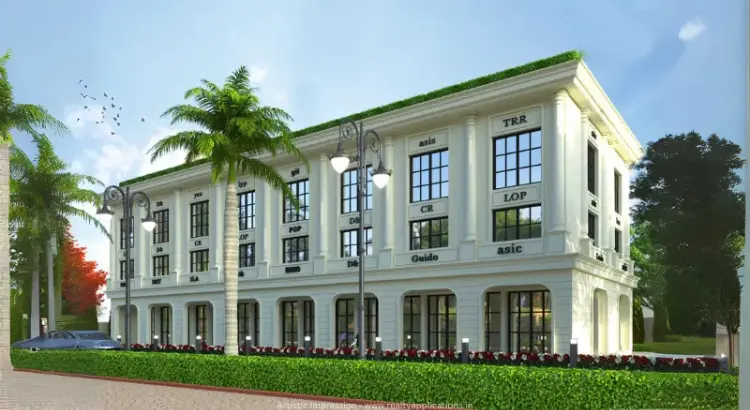
- Strategic Redevelopment: The small plot was planned for a modern shop-cum-office (SCO) format, a rising trend in Gurugram. We focused on creating spaces suitable for flexible co-working arrangements or small business offices, aligning with the booming demand for such spaces in Gurugram, which reported over 85% occupancy rates for co-working spaces in 2024.
- Modern Amenities and Sustainable Practices: We advised incorporating features highly valued by contemporary commercial tenants: high-speed internet infrastructure, smart security systems, energy-efficient HVAC, and modern aesthetics. Sustainable practices and green building features were integrated to appeal to environmentally-conscious tenants and enhance long-term value.
- Optimizing Operating Expenses: During the development phase, and post-completion, we focused on cost-efficiency. By carefully analyzing and comparing operating expenses with industry standards, and negotiating vendor contracts, we ensured higher net income, directly contributing to increased property value.
Phase 3: Portfolio Expansion and Market Positioning
The successful development and leasing of the first property provided the momentum and capital for rapid expansion. The increased net operating income (NOI) from the value-added asset allowed Mr. Sharma to secure additional financing on more favorable terms for subsequent acquisitions.
- Reinvestment and Replication: Profits from the first venture were strategically reinvested. Mr. Sharma replicated the value-add model, acquiring two more distressed or underutilized commercial properties in high-growth micro-markets like Sohna Road and Golf Course Extension Road. These areas were witnessing significant demand and appreciation.
- Strategic Tenancy: We focused on attracting stable, high-quality tenants, including small businesses, startups, and co-working operators, ensuring consistent rental income. This not only provided a steady cash flow but also made the portfolio more attractive for future scaling or exit opportunities.
- Market Visibility: Working with local real estate consultants like Realty Applications helped ensure optimal market positioning and efficient tenant acquisition, leveraging our extensive network and understanding of local demand.
Within 18 months, Mr. Sharma had transformed his initial USD 200,000 into a portfolio of three strategically located and value-enhanced commercial properties, generating substantial rental income and demonstrating significant capital appreciation. The total estimated value of his commercial empire exceeded USD 1 million (approximately INR 8.3 Crore), representing a remarkable return on his initial investment.
Key Pillars of Success: Deconstructing the Strategy
Mr. Sharma's rapid ascent was not accidental. We observe several critical factors that underpinned his success:
Market Research and Niche Identification
His success began with an acute understanding of the market. Instead of broadly investing, he focused on Gurugram's high-potential, underserved commercial segments. Identifying the rise of flexible workspaces and the demand for modern, smaller commercial units allowed him to target properties with high absorption rates and rental yields.
Leveraging Local Expertise
Partnering with a local real estate consultant, such as Realty Applications, provided invaluable on-the-ground intelligence. This included insights into micro-market trends, legal nuances of property acquisition in India, access to financing options, and a network for tenant placement. This local expertise is crucial, especially for overseas investors.
Strategic Financing and Capital Allocation
Mr. Sharma did not shy away from leveraging debt. By demonstrating a clear value-add plan and focusing on income-generating assets, he was able to secure favorable financing, turning his USD 200,000 into a much larger purchasing power. Financing options like term loans and lease rental discounting are increasingly available from banks and NBFCs in India for commercial properties.
Risk Mitigation and Adaptability
Thorough due diligence, as detailed earlier, was paramount in mitigating legal and financial risks inherent in Indian property markets. Furthermore, his adaptability to market demands, like focusing on flexible workspaces, ensured that his properties remained relevant and attractive to a broad tenant base.
Comparative Analysis: Traditional vs. Aggressive Growth Strategy
To highlight the efficacy of Mr. Sharma's approach, we can compare it with a more traditional, passive investment strategy:
| Feature | Traditional Investment (Passive) | Mr. Sharma's Strategy (Aggressive Growth/Value-Add) |
|---|---|---|
| Initial Capital Deployment | Investing in a stable, fully-leased property with low risk and moderate returns. | Investing in undervalued, underutilized properties with high potential for enhancement. |
| Risk Profile | Lower risk, slower appreciation, often in mature markets. | Moderate to higher risk due to redevelopment, but with significantly higher return potential. |
| Time Horizon for Returns | Long-term capital appreciation and steady, but lower, rental yields over many years. | Rapid capital appreciation and increased rental income within 18-24 months due to value addition. |
| Leverage Usage | Conservative use of leverage, if any. | Strategic use of debt to amplify returns, facilitated by projected income growth. |
| Expertise Required | Basic market understanding, focus on property management. | In-depth market analysis, redevelopment expertise, strong due diligence, financial structuring. |
| Investor Involvement | Typically hands-off, relies on property managers. | Highly involved in acquisition, design, development, and tenanting phases. |
The Role of Technology in Modern Real Estate
In 2026, technology plays an increasingly pivotal role in commercial real estate. We recognize that PropTech (Property Technology) solutions significantly streamline operations, enhance tenant experience, and improve property valuations. Mr. Sharma integrated smart building features, advanced security systems, and high-speed connectivity, which are non-negotiable for modern businesses. Furthermore, digital tools aided in market analysis, property valuation, and even due diligence, helping to identify lucrative opportunities and manage the investment process efficiently.
Replicating the Success: Actionable Insights for Aspiring Investors
Mr. Sharma's journey, while extraordinary, offers a reproducible framework for success in the Indian commercial real estate market:
- Deep Dive into Local Markets: Conduct thorough research to identify emerging micro-markets with strong growth catalysts like infrastructure development, corporate influx, or evolving urban planning. Gurugram's growth trajectory, for example, is heavily influenced by projects like the Dwarka Expressway and new business corridors.
- Embrace the Value-Add Strategy: Look for underpriced or underperforming assets that can be revitalized through renovation, modernization, or repurposing. This often involves converting older structures or developing new ones with modern amenities that cater to current market demands, such as flexible workspaces.
- Prioritize Due Diligence: Never underestimate the importance of meticulous legal, financial, and physical due diligence. Engage reputable legal and real estate professionals to ensure all aspects of the property's title, regulatory compliance, and physical condition are thoroughly vetted. This is particularly crucial in India to avoid potential litigation.
- Strategic Financing: Explore diverse financing avenues, including traditional bank loans, NBFCs, and potentially lease rental discounting if applicable. Understand the terms and leverage debt prudently to magnify returns.
- Partner with Local Experts: Engage experienced real estate consultants who possess deep local market knowledge, can navigate regulatory complexities, and have an established network for sourcing properties and tenants. For investors focusing on Gurugram, a local consultant like Realty Applications can provide an invaluable competitive edge.
- Focus on Tenant-Centric Development: Design or redevelop properties with the end-user in mind. Modern tenants seek comfort, efficiency, connectivity, and often, sustainability. Properties that meet these criteria will command higher rents and maintain lower vacancy rates.
- Plan for Scalability: From the first investment, envision how future acquisitions will fit into a larger portfolio. This involves consistent market monitoring and financial planning to allow for strategic reinvestment of profits.
Conclusion
The story of Mr. Rahul Sharma demonstrates that building a commercial real estate empire, even with a relatively modest initial capital of USD 200,000, is achievable within a short timeframe in a high-growth market like Gurugram. His success was forged through a combination of astute market intelligence, a proactive value-add investment strategy, rigorous due diligence, and the indispensable support of local real estate expertise.
At Realty Applications, we believe that such success stories are not merely aspirational but serve as a practical blueprint. The Indian commercial real estate market continues to offer unparalleled opportunities for growth and wealth creation. By adopting a strategic, informed, and diligent approach, investors can emulate Mr. Sharma's journey and carve out their own commercial empires, contributing to and benefiting from India's remarkable economic expansion. We are committed to guiding our clients through every step of this rewarding investment landscape.