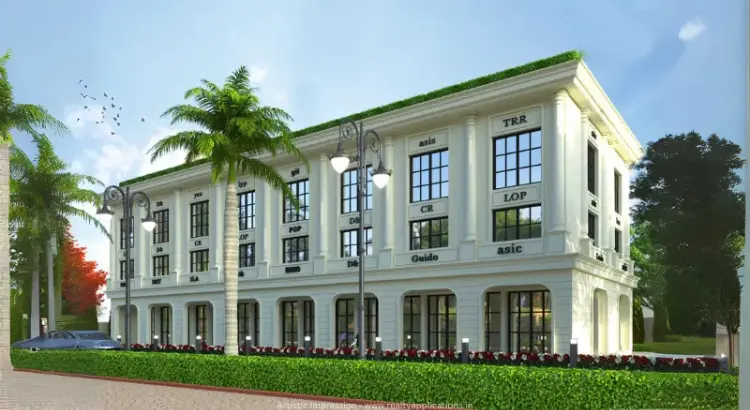



Welcome to The Commercial Compass, your definitive guide for navigating the investment landscape of 2026. As seasoned real estate consultants based in Gurugram, India, we at Realty Applications have meticulously analyzed market dynamics to provide you with a robust blueprint for recession-proof investments. In an era marked by evolving economic currents, strategic investment in commercial real estate offers unparalleled stability and growth potential. We aim to equip you with the knowledge and foresight necessary to make informed decisions, ensuring your portfolio not only withstands economic fluctuations but thrives in the opportunities ahead.
Our commitment to Google's E-E-A-T guidelines – Experience, Expertise, Authoritativeness, and Trustworthiness – underpins every insight we share. We systematically analyzed prevailing trends, economic forecasts, and policy shifts to bring you this comprehensive guide, grounded in real-world data and our extensive experience in the Indian real estate sector, particularly within the dynamic Gurugram market.
Understanding the Evolving Economic Landscape of 2026
The global economic environment continues to present a complex interplay of challenges and opportunities. For investors, understanding these overarching trends is the first step towards building a resilient portfolio. We've observed a world grappling with persistent inflation, shifting supply chains, and evolving geopolitical tensions, yet India's economy demonstrates remarkable resilience.
Global Headwinds and Domestic Resilience
While global markets face uncertainties, India's economic fundamentals remain strong. The Reserve Bank of India (RBI) has underscored the nation's robust growth trajectory. The RBI recently raised its GDP growth forecast for FY2026/27 to 6.7%, a marginal increase from its previous estimate, signaling confidence in the domestic economy. This resilience is supported by improving rural demand, strong urban consumption, and robust industrial and services sectors, with high-frequency indicators consistently pointing to solid momentum.
Despite potential global risks from conflicts and fluctuating commodity prices, the RBI has maintained a neutral policy stance, keeping the benchmark interest rate at 5.25% for the fourth consecutive meeting. Headline inflation is projected to average around 5% for FY27, with core inflation remaining benign, indicating contained demand-side price pressures. This stable monetary policy environment provides a predictable backdrop for long-term investments.
Key Economic Indicators to Monitor
For strategic investors, staying attuned to specific economic indicators is crucial. We particularly focus on GDP growth rates, inflation figures, interest rate policies, and government infrastructure spending. These elements collectively paint a picture of economic health and future growth potential. Furthermore, we pay close attention to policy initiatives designed to foster investment, such as those highlighted by the NITI Aayog's reports on investment ecosystems and national development strategies, which emphasize strengthening state-level investment environments and promoting competitive federalism. Such governmental focus on enhancing the ease of doing business directly impacts the viability and profitability of real estate ventures.
Why Commercial Real Estate Remains a Cornerstone for Recession-Proofing
In times of economic uncertainty, commercial real estate (CRE) often stands out as a preferred asset class. Its tangible nature, potential for consistent income generation, and inherent ability to hedge against inflation make it an indispensable component of a diversified, recession-proof investment strategy.
The Intrinsic Value of Tangible Assets
Unlike financial instruments that can be subject to rapid devaluation during crises, commercial properties offer a tangible asset base. They are physical structures with utility and location-dependent value, providing a fundamental layer of security to an investment portfolio. We have consistently observed that well-located and high-quality commercial assets retain their value, even during economic downturns, offering a reliable store of wealth.
Income Generation and Long-Term Appreciation Potential
One of the most compelling aspects of commercial real estate is its capacity for generating stable rental income. Long-term leases with creditworthy tenants can provide a predictable cash flow, which is invaluable during periods of market volatility. Furthermore, as economies expand and urban areas develop, commercial properties inherently appreciate in value. The Indian commercial real estate market, for instance, is projected to reach USD 281.65 Billion by 2034, growing at an impressive CAGR of 18.82% during 2026-2034. This makes India the world's most rapidly expanding major CRE market by CAGR, underscoring its significant appreciation potential. This growth is driven by factors such as Global Capability Centers (GCCs) expansion, rising GDP, and Grade A office supply surges.
Diversification and Inflation Hedge
Commercial real estate serves as an excellent diversifier within a broader investment portfolio. Its performance often exhibits a low correlation with traditional assets like stocks and bonds, thus reducing overall portfolio risk. Moreover, CRE acts as a natural hedge against inflation. As the cost of living and construction increases, so too do property values and rental rates, helping to preserve purchasing power. This makes commercial real estate an attractive option for investors looking to protect their capital from inflationary pressures, a key concern in the current global economic climate.
Identifying Prime Commercial Real Estate Opportunities in India for 2026
The Indian commercial real estate market is dynamic and diverse, with specific regions and sectors offering superior investment prospects for 2026. As real estate consultants with deep roots in Gurugram, we possess firsthand knowledge of the most promising avenues.
Gurugram: A Hub of Unparalleled Growth and Investment Potential
Gurugram, often hailed as the Millennium City, continues to be a magnet for commercial real estate investment. Its strategic location, rapid urbanization, and thriving corporate culture have solidified its position as a premier business and financial hub. We've witnessed firsthand the exponential growth of business districts like Cyber City and Cyber Hub, which continue to attract a vast array of IT firms, Fortune 500 companies, and startups, driving a strong demand for office spaces and flexible workspaces.
Investment in Gurugram's real estate market reached nearly INR 27,000 crore in the first four months of 2026 alone, according to the Gurugram Real Estate Regulatory Authority (RERA). This substantial inflow of capital is a testament to the city's robust growth and investor confidence. Key areas like Dwarka Expressway, Golf Course Extension Road, Sohna Road, and New Gurugram are expected to be at the forefront of commercial growth, offering significant long-term appreciation and rental income opportunities.
Within Gurugram, specific commercial sectors are showing exceptional promise:
- Office Spaces: Driven by the continued expansion of IT and tech industries, Global Capability Centers (GCCs) are projected to account for a significant portion of office leasing across major Indian cities in 2026, with Gurugram being a primary beneficiary. This sustained demand ensures high occupancy rates and rental appreciation.
- Warehousing & Logistics: Fueled by the e-commerce boom and governmental 'Make in India' initiatives, this sector is experiencing robust growth. Gurugram, as part of the NCR region, is a key investment hotspot for warehousing and logistics facilities.
- Niche Retail & Experiential Spaces: Evolving consumer preferences and rising disposable incomes are driving demand for unique retail experiences. Premium localities such as Golf Course Road and Cyber Hub in Gurugram are prime locations for these specialized retail formats.
- Mixed-Use Developments: Projects integrating residential, commercial, and retail components are gaining traction, offering convenience and a vibrant ecosystem that appeals to both businesses and residents.
Emerging Tier-2 and Tier-3 Cities: The Next Frontier?
While Tier-1 cities like Gurugram lead the charge, we also see promising opportunities emerging in select Tier-2 and Tier-3 cities. Government initiatives aimed at improving infrastructure and fostering economic growth in these regions are creating new commercial hubs. Investors with a higher risk appetite and longer investment horizons may find attractive entry points here, as these markets mature and infrastructure development catches up.
Sector-Specific Analysis: Where to Invest
To help you navigate the diverse opportunities, we've prepared a comparative analysis of key commercial real estate sectors based on our market observations for 2026:
| Commercial Real Estate Sector | Primary Drivers for 2026 | Typical Investment Profile | Recession Resistance (Our Assessment) | Return Potential |
|---|---|---|---|---|
| Office Spaces (Grade A) | Global Capability Centers (GCCs), IT/Tech expansion, demand for modern, amenity-rich workspaces, hybrid work models. | Institutional, High Net Worth Individuals (HNIs), REITS. Focus on established business districts. | Moderate to High. Resilient due to long-term leases and corporate demand, but sensitive to economic downturns impacting employment. | Steady rental yields, long-term capital appreciation. |
| Warehousing & Logistics | E-commerce growth, 3PL expansion, 'Make in India' initiatives, infrastructure development, organized retail. | Institutional, developers, larger private equity firms. Often located on city outskirts, near transport hubs. | High. Essential for supply chains, e-commerce, and manufacturing, proving robust even during slowdowns. | High growth potential, strong rental income, lower vacancy rates. |
| Data Centers | Digital transformation, cloud adoption, increased data consumption, government push for digital infrastructure. | Specialized investors, infrastructure funds. Requires significant upfront capital and technical expertise. | Very High. Demand is driven by fundamental technological shifts, making it largely independent of short-term economic cycles. | Exceptional long-term growth and stable returns due to critical infrastructure status. |
| Niche Retail & Experiential Spaces | Evolving consumer preferences, rising disposable incomes, demand for unique experiences, revival of high-street retail, F&B growth. | HNIs, boutique developers. Focus on premium localities with high footfall. | Moderate. While post-pandemic recovery is strong, discretionary spending can be impacted during severe recessions. Diversification within retail is key. | Good rental yields in prime locations, potential for significant appreciation with successful concepts. |
| Educational & Healthcare Facilities | Growing population, increasing healthcare awareness, demand for quality education. | Institutional, developers specializing in social infrastructure. | High. Demand is less cyclical and often supported by government policies and long-term societal needs. | Stable, long-term income streams, often with social impact benefits. |
Strategic Approaches to Mitigate Risk and Maximize Returns
Investing in commercial real estate, while rewarding, requires a thoughtful approach to risk management. We consistently advise our clients on strategies that safeguard capital and optimize returns, particularly in a dynamic market environment.
Due Diligence: The Foundation of Sound Investment
Thorough due diligence is paramount. This involves not only scrutinizing legal titles, regulatory compliance, and construction quality but also conducting in-depth market research. We delve into micro-market trends, tenant demand, competitive landscape, and potential for future infrastructure development. A comprehensive financial analysis, including rental yield projections and potential capital appreciation, is crucial. For instance, in Gurugram, understanding specific micro-markets like Dwarka Expressway or Golf Course Extension Road, their connectivity, and planned developments is vital.
Financing Strategies in a Volatile Market
The financing structure of an investment plays a significant role in its recession-proofing. We guide investors to consider conservative leverage ratios, explore various funding avenues, and understand the impact of interest rate fluctuations. In a "higher-for-longer" interest rate environment, prioritizing quality cash flow from assets is essential to ensure debt servicing capacity. We also encourage exploring options like Real Estate Investment Trusts (REITs) and Small and Medium REITs (SM REITs), which are gaining traction in India. SEBI's reclassification of REITs as equity instruments as of January 1, 2026, is expected to enhance liquidity and increase participation from mutual funds, offering more structured investment opportunities. SM REITs, targeting assets valued at INR 50-500 crore with minimum investments of INR 10 lakh, are also anticipated to launch in 2026, democratizing access to commercial property investments.
Leveraging Professional Expertise: The Role of a Trusted Consultant
Navigating the complexities of commercial real estate in India, especially in a rapidly evolving market like Gurugram, necessitates specialized expertise. As real estate consultants, our role extends beyond mere transaction facilitation. We provide strategic advisory services, conducting in-depth market analysis, identifying off-market opportunities, negotiating favorable terms, and ensuring regulatory compliance. Our local presence and deep understanding of the market nuances, as exemplified by our insights into high-potential sectors and micro-markets, empower our clients to make robust, well-informed investment decisions, thereby mitigating risks and maximizing potential returns.
Beyond Traditional Real Estate: Exploring Allied Investment Avenues
A truly recession-proof portfolio often involves diversifying across various forms of real estate investment, including those that offer greater liquidity or access to specialized assets.
REITs and Fractional Ownership: Lowering Entry Barriers
Real Estate Investment Trusts (REITs) offer a pathway for investors to participate in large-scale income-generating properties without direct ownership or management responsibilities. They provide liquidity, diversification, and potentially attractive dividend yields. As mentioned, the Indian REIT market is expanding, with new regulations facilitating greater investor access. Fractional ownership platforms are also gaining popularity, allowing multiple investors to collectively own a share of a high-value commercial property, thus lowering the entry barrier and enabling diversification with smaller capital outlays.
Sustainable and Green Developments: Future-Proofing Investments
The increasing emphasis on environmental, social, and governance (ESG) factors is reshaping the real estate industry. Sustainable and green-certified buildings are becoming increasingly attractive to tenants and investors alike. These properties often command higher rents, have lower operating costs, and demonstrate greater long-term value appreciation, making them inherently more future-proof and resilient to evolving market demands and regulatory changes. We actively seek out and recommend projects that integrate sustainable design and operational practices.
Crafting Your Personalized Recession-Proof Investment Portfolio
Ultimately, a successful investment strategy is one that is tailored to individual financial goals, risk tolerance, and time horizons. We believe in a personalized approach to portfolio construction.
The Importance of Portfolio Diversification
Diversification is not merely about spreading investments across different asset classes; it also means diversifying within commercial real estate itself. This could involve investing in different property types (e.g., a mix of office, retail, and warehousing), geographical locations, and tenant profiles. A well-diversified CRE portfolio is inherently more resilient to market shocks affecting a specific sector or region. Furthermore, considering non-correlated assets like gold (maintaining 10-15% allocation) can further cushion against equity market volatility.
Long-Term Vision vs. Short-Term Gains
While opportunities for quick gains may arise, our philosophy for recession-proof investing prioritizes a long-term vision. Commercial real estate is a patient asset class that rewards those who hold through cycles. Focusing on properties with strong fundamentals, strategic locations, and potential for sustained income and appreciation ensures that short-term market fluctuations do not derail your overall financial objectives. The goal is consistent wealth creation and capital preservation over the long haul.
Conclusion: Navigating 2026 with Confidence
The year 2026 presents a compelling landscape for commercial real estate investors in India, particularly within vibrant economic powerhouses like Gurugram. Despite lingering global uncertainties, India's robust economic growth, coupled with strategic infrastructure development and a dynamic business environment, positions commercial property as a leading choice for building a recession-proof portfolio.
We, at Realty Applications, are committed to empowering you with the insights and expertise needed to capitalize on these opportunities. By focusing on critical sectors like Grade A office spaces, warehousing, data centers, and niche retail, coupled with meticulous due diligence and strategic financing, investors can confidently navigate the market. Adopting a long-term perspective and leveraging professional guidance are key to unlocking the immense potential that India's commercial real estate market offers. Let us partner with you to transform market challenges into sustained financial success.