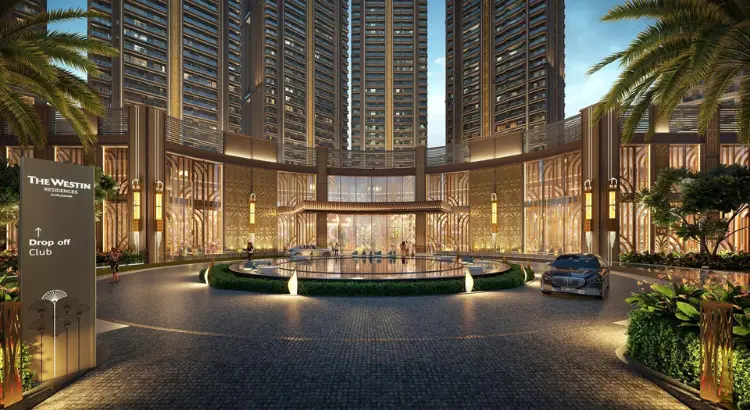



Carpet Area vs Built-Up vs Super Area: Understanding Flat Pricing in Gurgaon
Carpet Area vs Built-Up vs Super Area: How Gurgaon Builders Price Your Flat
Navigating the real estate market in Gurgaon, a dynamic hub within the Delhi-NCR region, requires more than just identifying the right location or amenities. For any prospective homebuyer or investor, a clear understanding of property measurement terms such as 'Carpet Area,' 'Built-Up Area,' and 'Super Area' is absolutely crucial. These terms directly influence the price you pay, the usable space you get, and ultimately, the true value of your investment. Misinterpreting these can lead to significant financial implications and dissatisfaction with your purchase.
The Real Estate (Regulation and Development) Act, 2016 (RERA), has brought much-needed transparency to these definitions, particularly standardizing the Carpet Area. However, the legacy of different measurement practices, combined with varied marketing strategies from developers, means buyers still need to be vigilant. This comprehensive guide from Realty Applications aims to demystify these terms, explain their relevance in Gurgaon's competitive market, and empower you to make informed real estate decisions.
Understanding the Core Concepts
When you explore flats in Gurgaon, you'll invariably encounter three primary area measurements. Each serves a distinct purpose and includes different components of the property.
What is Carpet Area?
The Carpet Area is arguably the most important measurement for a homebuyer because it represents the actual usable space within your apartment. It's the area that can be covered by a carpet, excluding the thickness of external walls, service shafts (like plumbing or electrical ducts), and exclusive balcony or terrace areas. Crucially, it includes the area covered by the internal partition walls of the apartment.
- Includes: Bedrooms, living room, dining area, kitchen, bathrooms, internal passages, and the area under internal partition walls.
- Excludes: External walls, service shafts, exclusive balconies, verandahs, and open terraces.
Under RERA, the Carpet Area is the standardized measurement that developers are legally required to disclose and base their pricing on in all sale agreements. This ensures greater transparency and helps buyers compare properties accurately.
What is Built-Up Area?
The Built-Up Area expands upon the Carpet Area by adding the space taken up by the walls (both internal and external) and often includes attached exclusive spaces like balconies, covered terraces, and utility areas. While it provides a more comprehensive picture of the constructed space, it is still smaller than the Super Area.
- Includes: Carpet Area + thickness of internal and external walls + exclusive balconies/verandahs + utility areas.
- Excludes: Common areas like lobbies, staircases, and lifts.
Generally, the Built-Up Area is 10-20% larger than the Carpet Area, depending on the building's design and wall thickness.
What is Super Area?
The Super Area, often referred to as the 'saleable area,' is the largest of the three measurements and is the figure developers historically used most prominently in their marketing materials. It includes the Built-Up Area of the apartment plus a proportionate share of the common areas and amenities of the entire building or complex.
- Includes: Built-Up Area + proportionate share of common amenities such as lobbies, staircases, elevator shafts, corridors, clubhouses, gymnasiums, swimming pools, machine rooms, security cabins, and sometimes even garden areas.
The Super Area is primarily a pricing tool used by developers, as it allows for a lower stated price per square foot while encompassing shared facilities.
The Critical "Loading" Factor in Flats
The concept of "loading" is central to understanding the difference between your usable space and the advertised Super Area, especially in competitive markets like Gurgaon. The loading factor represents the percentage difference between the Super Built-Up Area and the Carpet Area. It essentially quantifies how much of your payment goes towards shared facilities versus the private space within your flat.
In simple terms, if a builder adds a "loading" of 30% to the Carpet Area to arrive at the Super Area, it means 30% of the additional space you are paying for consists of common amenities.
The formula to calculate the loading factor is: Loading Factor = (Super Built-up Area ÷ Carpet Area) - 1. For instance, if an apartment has a Super Built-up Area of 1,500 sq ft and a Carpet Area of 1,200 sq ft, the loading factor is (1500 ÷ 1200) - 1 = 1.25 - 1 = 0.25 or 25%.
Conversely, to find the Carpet Area from a given Super Area and loading factor, you can use: Carpet Area = Super Built-up Area ÷ (1 + Loading Factor).
In Gurgaon, loading factors can vary significantly. While a loading factor between 20-30% is generally considered reasonable for most residential projects, it can range from 25% to 40% in mid-range developments. In luxury and ultra-luxury apartments, particularly in areas with extensive amenities, loading factors can even reach 40-50% or more. Higher loading generally means you're paying for more premium common areas, which can be justified if those amenities align with your lifestyle.
Why These Distinctions Matter for Homebuyers in Gurgaon
Understanding the nuances of Carpet Area, Built-Up Area, and Super Area is critical for several reasons, especially when investing in Gurgaon's competitive real estate market:
- Financial Implications: The most significant impact is on the actual cost per square foot you pay for usable space. A property advertised at a certain price per Super Built-up Area might have a much higher effective price per Carpet Area. For example, an apartment marketed at INR 5,000 per sq ft on Super Built-up Area with a 30% loading factor effectively costs INR 6,500 per sq ft of usable Carpet Area. This difference can amount to lakhs of INR on your total property cost. Realty Applications advises buyers to analyze the true cost per square foot to make informed decisions and avoid overpaying for space they cannot exclusively use. For guidance on financial planning, you can explore resources like Salary Needed for 2 Crore Flat in Gurgaon | Home Loan Guide.
- Usable Space and Livability: The Carpet Area directly dictates how much living space you will have for your furniture, movement, and daily life. Two apartments with the same Super Area can offer vastly different Carpet Areas depending on the loading factor and design efficiency. Focusing on the Carpet Area ensures you get adequate space that truly meets your needs and expectations.
- RERA's Role in Transparency: Before RERA, developers often marketed properties solely based on Super Built-up Area, leading to confusion and inflated perceptions of space. The Real Estate (Regulation and Development) Act, 2016, mandates that developers price and sell flats based on the Carpet Area. This legal framework protects homebuyers by ensuring a standardized, transparent measurement for property transactions, reducing the scope for misleading practices. You can refer to RERA project registrations to verify declared Carpet Areas.
- Accurate Comparison: To fairly compare different projects, especially in micro-markets across Gurgaon, it is essential to standardize the comparison metric. Using the Carpet Area as the basis for price per square foot provides a reliable and apples-to-apples comparison, preventing misjudgment of value.
How Gurgaon Builders Price Your Flat: A Deeper Dive
While RERA has mandated the disclosure of Carpet Area for all new projects, the initial marketing and pricing strategies employed by Gurgaon builders often still highlight the Super Area. This is because the larger Super Area figure can appear more attractive to potential buyers, creating an impression of greater value. Builders typically advertise a 'Basic Sale Price' (BSP) per square foot, which is usually based on the Super Area.
However, the final cost of a flat in Gurgaon involves more than just the price per square foot of the Super Area. Buyers must also account for various additional charges such as Goods and Services Tax (GST), stamp duty and registration fees, club membership, parking charges, and Preferential Location Charges (PLC) for amenities like park-facing or higher-floor units.
To ascertain the true cost per usable square foot, buyers should take the total cost of the flat (including all additional charges) and divide it by the Carpet Area. This calculation reveals the real expense for the space you will actually inhabit.
For example, if a luxury flat in Gurgaon's Golf Course Extension Road area is priced at INR 2 Crore on a Super Built-up Area of 2,000 sq ft, but has a Carpet Area of only 1,300 sq ft (due to a high loading factor common in Luxury Flats in Gurgaon India), your effective cost per usable square foot is approximately INR 15,385. This is significantly higher than the advertised INR 10,000 per Super Built-up Area.
Navigating the Numbers: Tips for Buyers
Making an informed property decision in Gurgaon requires meticulous attention to detail. Here are practical tips for navigating the complexities of area measurements:
- Always Request RERA Carpet Area: Ensure that the developer provides the exact Carpet Area measurement as per RERA guidelines in all documentation, including the agreement for sale. This is a legal requirement.
- Calculate Effective Price per Carpet Area: Do not rely solely on the price per Super Built-up Area. Divide the total property cost (including all additional charges) by the Carpet Area to determine the true cost of your usable space. This is the only fair metric for comparison across projects.
- Understand the Loading Factor: Ask the developer for a clear breakdown of the loading factor and what common areas are included in it. While a higher loading is common in projects with extensive amenities (e.g., luxury projects like Trump Tower 2 Sector 69 Gurgaon), assess if these amenities genuinely add value for you.
- Review Floor Plans with Dimensions: Cross-reference the stated Carpet Area with detailed floor plans that include dimensions. This can help verify the accuracy of the measurements.
- Factor in Bank Valuations: When applying for a home loan, banks often conduct their independent valuations based on the usable area. A significant mismatch between the developer's figures and the bank's assessment can be a red flag.
- Seek Expert Real Estate Advisory: Partnering with a trusted real estate consultancy like Realty Applications can provide invaluable guidance. Our experts can help you analyze property configurations, verify RERA compliance, and compare projects on an 'apples-to-apples' basis, ensuring you invest wisely in Gurgaon.
Comparing the Area Types: A Quick Overview
To summarize the key differences, here's a comparative table:
| Feature | Carpet Area | Built-Up Area | Super Area (Saleable Area) |
|---|---|---|---|
| What it Covers | Net usable floor area within the apartment. | Carpet Area + area of walls (internal & external) + exclusive attached areas (balconies, terraces). | Built-Up Area + proportionate share of common areas (lifts, stairs, lobbies, amenities). |
| Inclusions | Rooms, kitchen, bathrooms, internal passages, internal partition walls. | Carpet Area + wall thickness, balconies, covered terraces, utility areas. | Built-Up Area + common facilities (clubhouse, gym, swimming pool, main lobby, corridors). |
| Exclusions | External walls, service shafts, exclusive balconies/terraces, common areas. | Common areas. | None, as it's the all-encompassing 'saleable' area. |
| RERA Status | Mandatory disclosure and pricing basis. | Not legally standardized for pricing, but included in documents. | Must be disclosed, but not the basis for pricing/sale. |
| Usability | 100% usable space. | Partially usable (structural elements included). | Includes shared spaces, not entirely exclusive to the unit. |
| Typical Size | Base reference (e.g., 100%). | ~10-20% more than Carpet Area. | ~25-50%+ more than Carpet Area (depending on loading). |
Conclusion
The journey of buying a flat in Gurgaon is a significant one, fraught with financial and emotional considerations. By thoroughly understanding the distinctions between Carpet Area, Built-Up Area, and Super Area, you equip yourself with the knowledge to navigate developer offerings confidently. RERA has been a game-changer, ensuring that the Carpet Area remains the benchmark for transparent transactions, yet vigilance and informed decision-making on the buyer's part are still paramount.
At Realty Applications, our mission is to empower buyers, investors, and property seekers across Gurgaon and Delhi-NCR with accurate, reliable, and actionable insights. Whether you're seeking real estate advisory, buyer consultation, or detailed analysis of Top 10 Luxury Flats in Gurgaon, our research-driven approach helps you avoid common pitfalls and secure the best value for your investment. Make your next property decision with clarity and confidence.